
Rover Location Database
Travel
- Travel
- 2026 CN71
- 2026 CN75
- 2026 CN78
- 2025 DN07
- 2024 DN19-29
- 2023 CN76
- 2022 CN76
- 2022 CN93
- 2022 CN93
- 2022 VHF
- 2021 CN78
- 2021 CN76
- 2011 CN78
- 2021 Ely, NV
- 2020 CN98
- 2020 DN08
- 2020 N7G
- 2019 DN27-07
- 2018 CN98
- 2018 DN08
- 2018 DN22-43
- 2018 EN02
- 2018 Article
- 2018 EM87
- 2017 Summer
- 2016 CN87
- 2014 CN82-92
- 2014 Plan
- 2014 VHF
- 2013 VHF
- 2012 Oct
- 2012 May
- 2012 VHF
- 2011 Sept
- 2011 June
- 2011 May
- 2011 CN97
- 2011 CN97
CN75 Lincoln City, Oregon
July 22-24, 2026
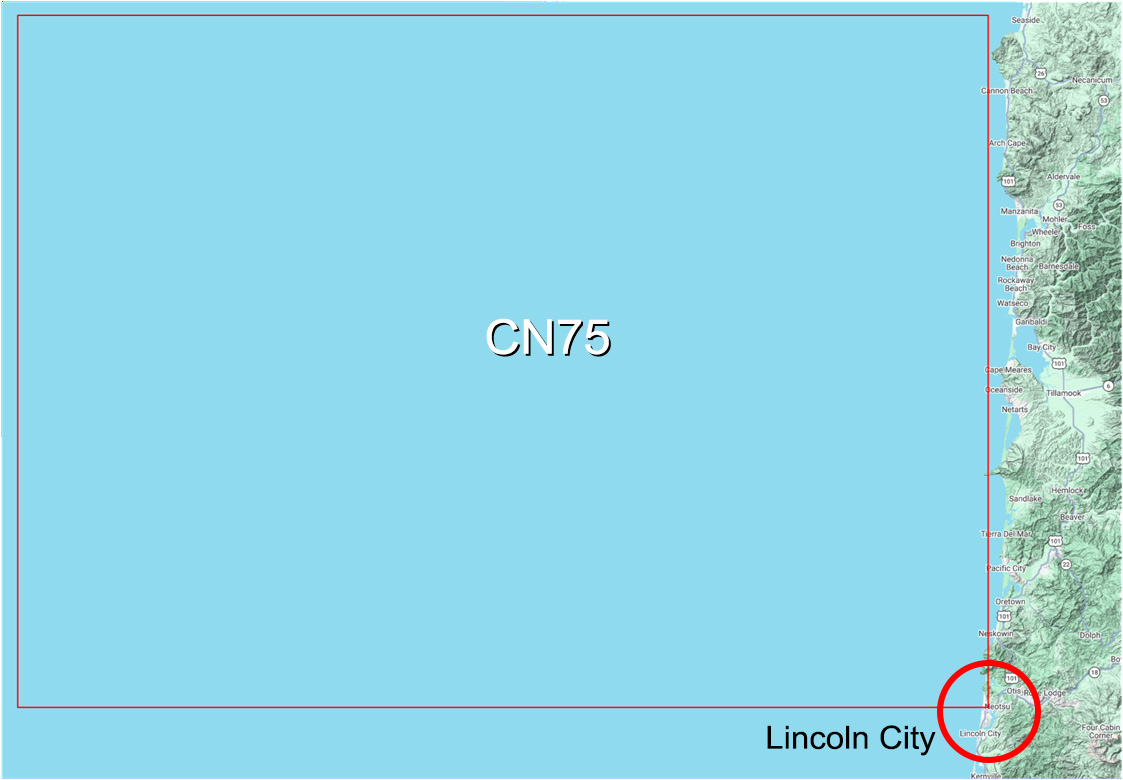
This trip was three days in Lincoln City, OR, on July 22-24, 2026, to activate CN75 which is (was!) the #2 most-wanted grid on 6 meters. CN75 is almost entirely ocean.
The Plan
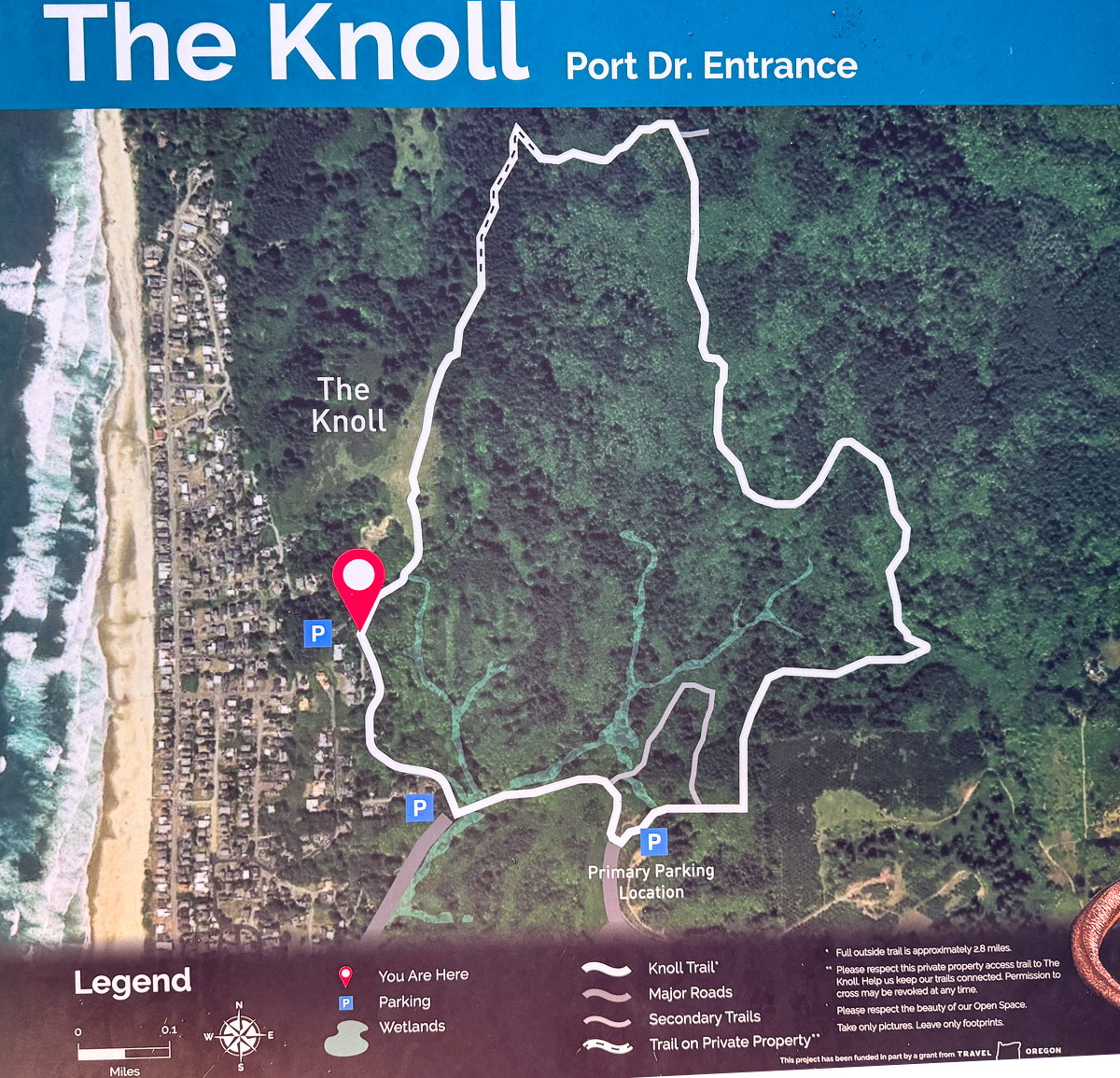
The target destination was a city park hilltop known as The Knoll in Lincoln City, OR. It's the only place with a decent horizon in this tiny sliver of land in a grid chockablock full of Pacific Ocean. (Check out the CN75 map.) The Knoll requires hiking with a portable station so, with that in mind, I brought luggable stuff: 10-watt IC-705, painter's pole, moxon, laptop and 12v battery.
Scouting The Knoll
I went for a walk on the first evening without carrying any gear, to scout this hillock. It turned out the 'hike' is a lovely well-maintained forest trail, but it's as steeply upward as a serious unbroken unending steep staircase for a half mile. It needs younger legs than mine to carry gear up there.
There are three places to park for your hike. I recommend driving to the top at the Port Dr Entrance and see if there's room to park. If not, come back down and park at the bottom of the hill.
On The Air
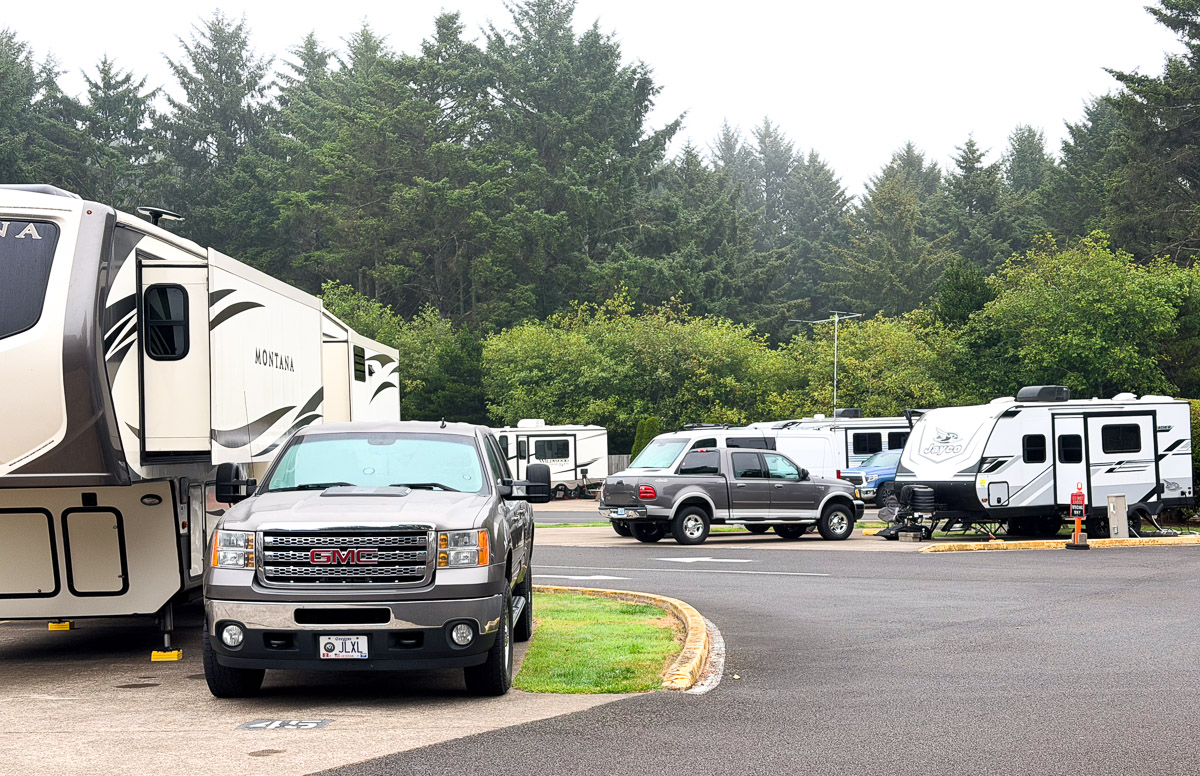
I operated all three days from my camper van in the Logan Road RV park. (Hint: the CN74-75 grid line goes through the RV parking lot but that one parking spot #13 was occupied. Darn.) I ran with 100 watts in the RV park: a barefoot IC-7300 and the moxon. I must admit it was super nice to have shore power, shelter, bathrooms, and short walk to stores and restaurants and Starbucks and a casino.
My first two days on the air were complete doldrums, like there was an RF suppressor field. Maybe there was - a coronal mass ejection had just arrived, and it was very difficult to work the next grid over. I was starting to question my life choices. Then the skies opened on my last day and made it all worthwhile. BIC for the win.
Jim K5ND wrote a blog post about trying to work me from Dallas, TX, about 1600 miles away. Read his story here: FFMA Mile Marker 487, CN75. Also read his followup: FFMA Mile Marker 488.
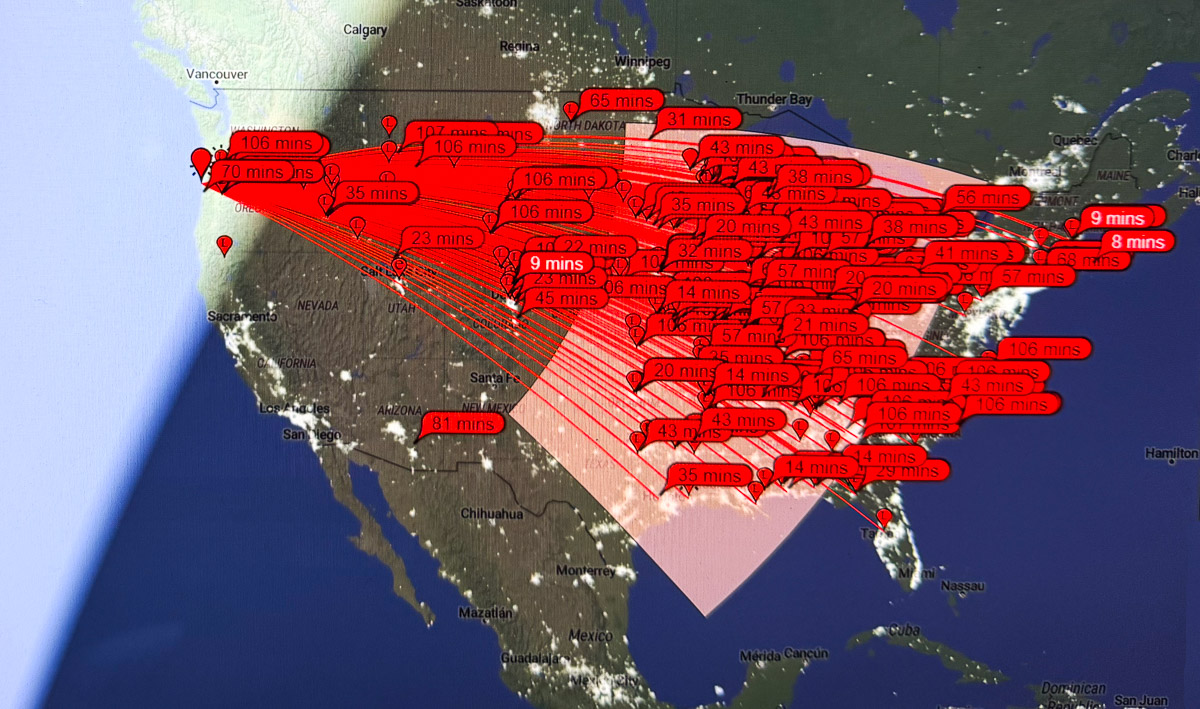
Massive Pileup to East Coast
The interesting part was the pileup with 20+ decodes every sequence. We successfully moved everyone from FT8 over to FT4. This was fun - I have never worked so many WSJT people so quickly on 6m. I had to let WSJT pick the caller by "max distance" and sometimes "max dB" to clear the queue as quickly as possible. Contacts happen too fast to manually pick the caller and keep every sequence full. And then my wife telephoned me during the whole chaos, lol.
We need to emphasize that a big station "loaded for bear" is not important. It's nice nice to have but not essential. Just go roving with what you have. It is far better to be somewhere with any gear at all, than to stay home.
East Coast to Europe
This trip had an unusual problem: There was a also massive opening from the East Coast to Europe. Many people turned east. I wish more of them had turned west; our path was open for hours. This was their last chance at CN75 for a while.
Results
Final score:
- 1 last-grid, Matt W3UUM in Texas EL29 (easy contact on FT4, no less)
- 1 next-to-last grid, Jim K5ND in Texas EM12 (read his blog post here)
- 1 next-to-next-to-last grid, Chris N4SIX
- 1 Japan contact
- 1 Seattle contact (Seattle has been nearly impossible during all my several trips to CN75, but Sid AB9BH managed it)
- 3 out of the 5 'elite' leaders on Gridzilla's list
- 3 days of enjoyable fresh 65-degree ocean breeze while the inland sweltered at 100
- Over 45 FFMA leaders worked, by my hand count
- Over 175+ contacts, almost all on the last afternoon in one giant spasm
- Dozens of double-hop contacts to the East Coast
- Many dozens of Midwest contacts
- Enough stations chasing CN75 to dim the national power grid
Lessons Learned
This trip highlights what can happen when the conditions are favorable. I normally recommend against roving with such a modest station (100w and moxon) but this trip proved otherwise. I got reports of +20 dB from the East Coast.
Go roving and bring whatever station you can put on the air - you'll make zero contacts if you don't try. You don't need a super station.
Rovers actually have to go there to find out what'll happen. That's why we go roving even this late in the season. RAFO: Rove Around, Find Out
I found no discernable difference on the air between the three spots I visited along Logan Road.
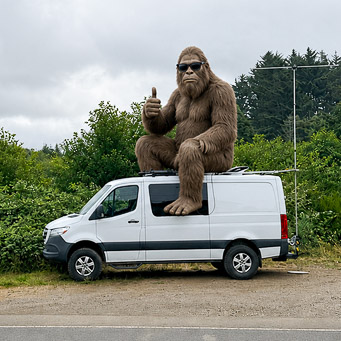
I tried two pullouts on Logan Road. All traffic ignored me completely. My large white van couldn't be missed - but I never saw anyone even turn their head to look at it.
The Logan Road RV Park is tribal-owned land. If you'd like to position a radio-in-a-box there, contact the tribal council and make a proposal. Or you can lease the Slot #13 (on the CN74-75 grid line) for $60/day, or on a long-term basis for about half that daily amount - $900 per month.
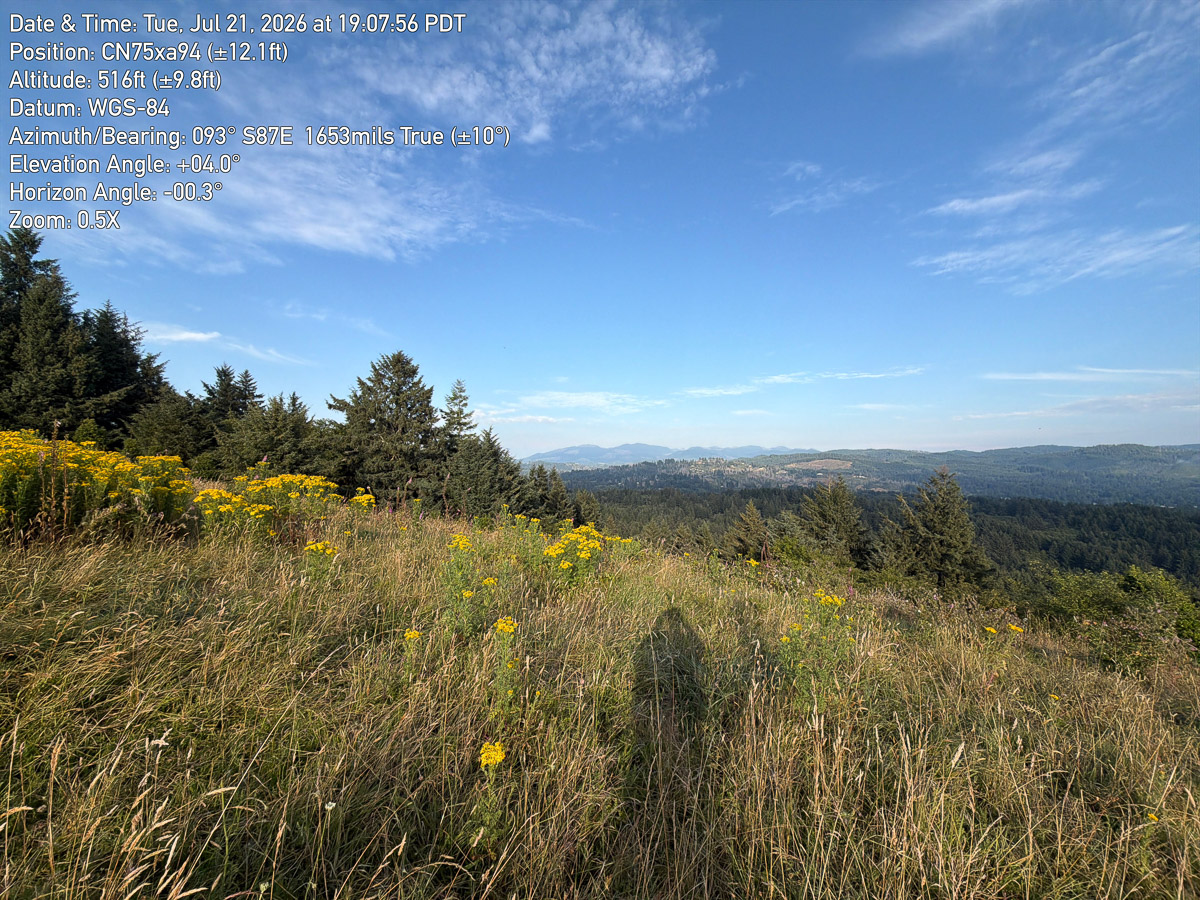
Hiking up The Knoll definitely offers a much better horizon. In fact, I recommend taking some time to enjoy the hike. The scenery looking down the coast and out over the ocean is spectacular.
To operate on The Knoll is another matter. The hike is challenging, it's exposed to sun and weather, and it takes at least 30 minutes each way, plus the time to set up and tear down. The tradeoff is gaining an extra hour or two on-the-air daily by operating full-time elsewhere.
The small Moxon antenna was inconspicuous in the RV park. I would not have been comfortable with a 5-element or even a 3-element Yagi in that fish bowl. Where's Waldo? Where's Waldo's antenna?
Conclusion
All contacts are in LoTW - let me know privately if anything is missing so I can fix broken QSOs.
Thanks to everyone for chasing me, and massive thanks for the several donations, and apologies to those who didn't quite make it into the log.
See you on the next grid trip!
Barry K7BWH
| < Previous | Page 3 of 39 | Next > |
©1998-2026 Barry Hansen