
Rover Location Database
Travel
- Travel
- 2026 CN71
- 2026 CN75
- 2026 CN78
- 2025 DN07
- 2024 DN19-29
- 2023 CN76
- 2022 CN76
- 2022 CN93
- 2022 CN93
- 2022 VHF
- 2021 CN78
- 2021 CN76
- 2011 CN78
- 2021 Ely, NV
- 2020 CN98
- 2020 DN08
- 2020 N7G
- 2019 DN27-07
- 2018 CN98
- 2018 DN08
- 2018 DN22-43
- 2018 EN02
- 2018 Article
- 2018 EM87
- 2017 Summer
- 2016 CN87
- 2014 CN82-92
- 2014 Plan
- 2014 VHF
- 2013 VHF
- 2012 Oct
- 2012 May
- 2012 VHF
- 2011 Sept
- 2011 June
- 2011 May
- 2011 CN97
- 2011 CN97
CN71 Above Crescent City, California
August 12-15, 2026
The #2 most-wanted grid square is almost in our back yard, so I activated CN71 on August 12-15 along with several nearby grids before and after.
For another perspective on my trips, see what Jim Wilson K5ND has to say about rovers:
Where is CN71? Use this link k7fry.com/grid/?qth=CN71 to see that it's mostly water. The populated beachfront parts are blocked from the rest of the country by the Pacific Coast Range. I was in the Smith River area in the upper right corner of CN71.
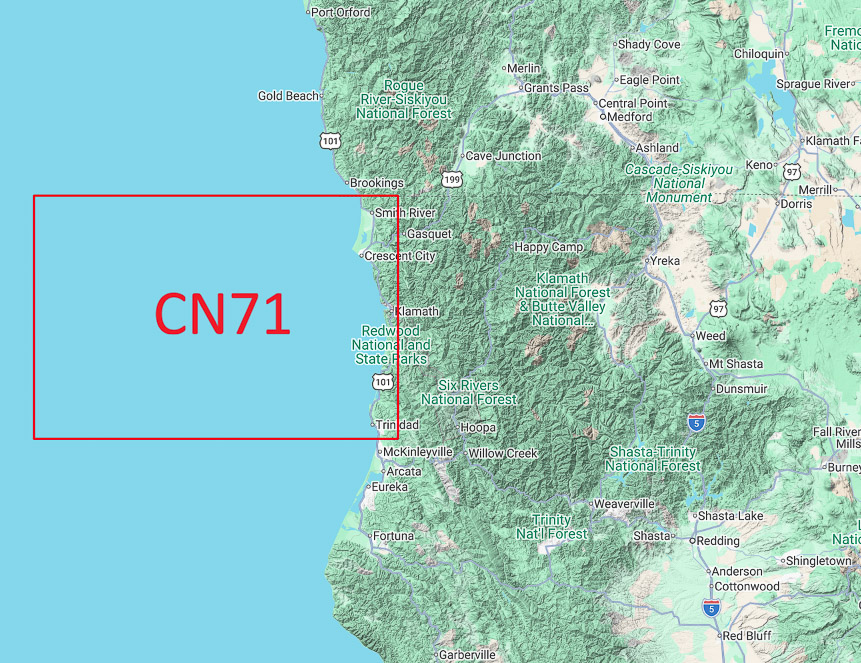
On this trip I wanted to scout more hilltops in adjacent grids. CN71 is minimum 600 miles driving from Seattle and I won't have another chance there for a long time to come. Plus, I'm working on the “Reverse VUCC Award” to activate 100 grids, and in Aug 2026 am ranked #2 on 6 meters on Gridzilla.us. So, I made the most of this chance to explore. My route would be vaguely something like this:
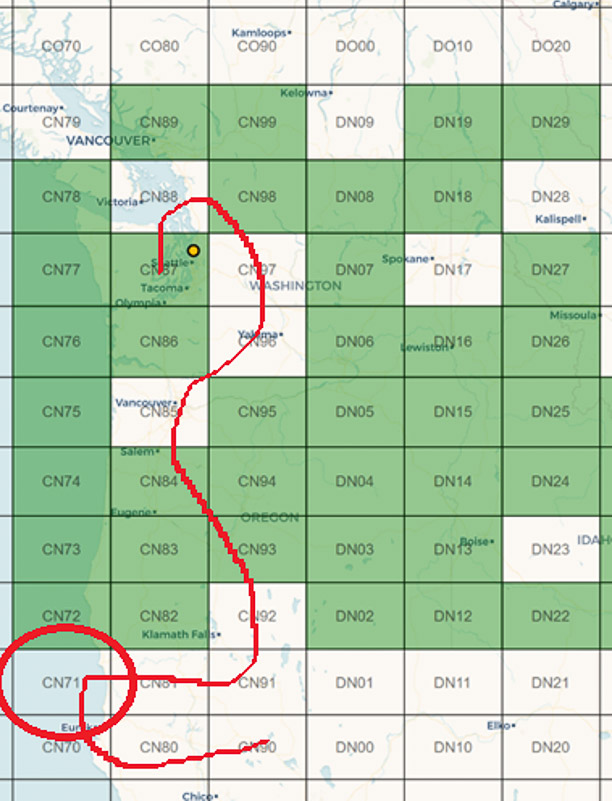
It's now mid-August and this might be about the end of the E-skip season. But, is it, really? RAFO - rove around, find out! You never know until you get there.
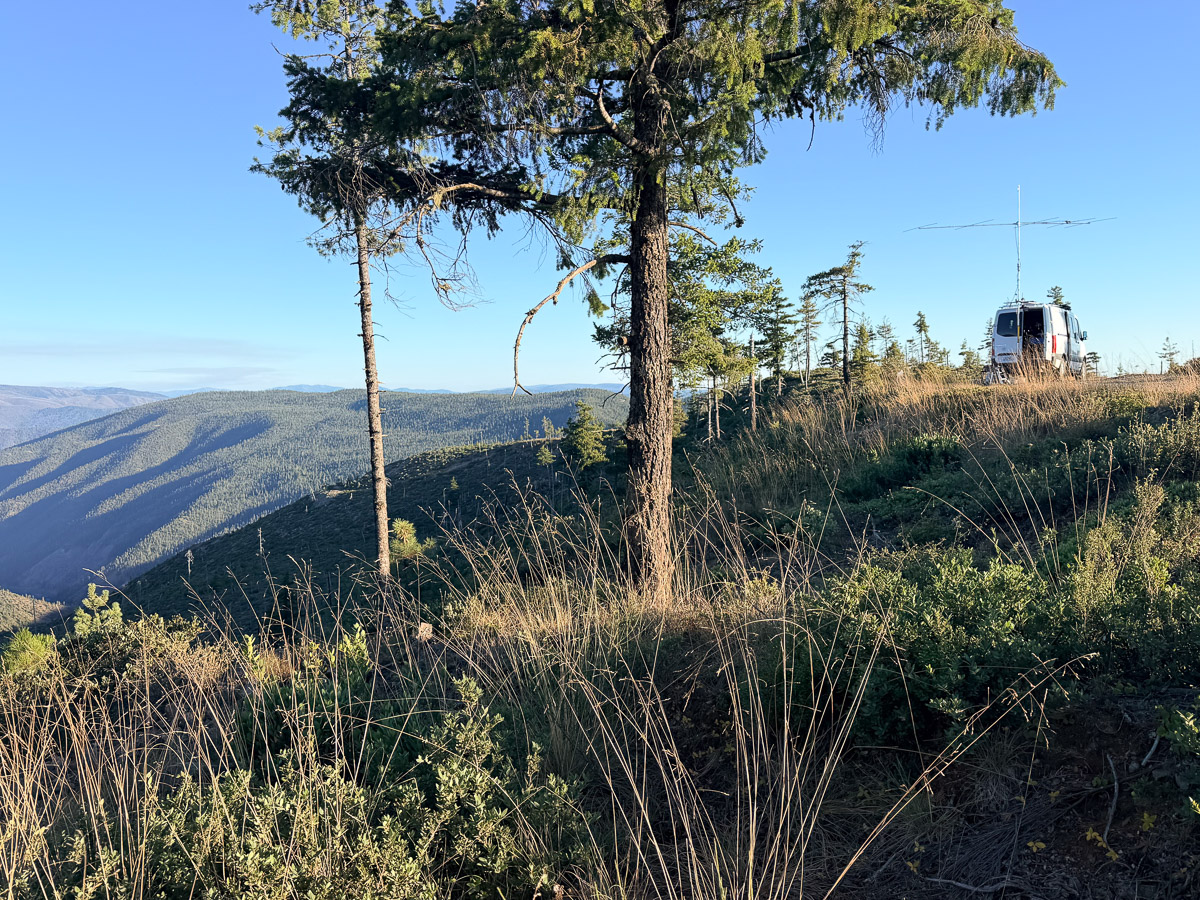
Mike KB7ME told me about an ideal spot on a ridge in CN71, the decommissioned Stone Corral Lookout bump on a ridge high above the redwood forests. On arrival, I found a perfectly awesome hilltop with incredible views of surrounding mountains and steep valleys. It might be the very best operating spot in all of CN71.
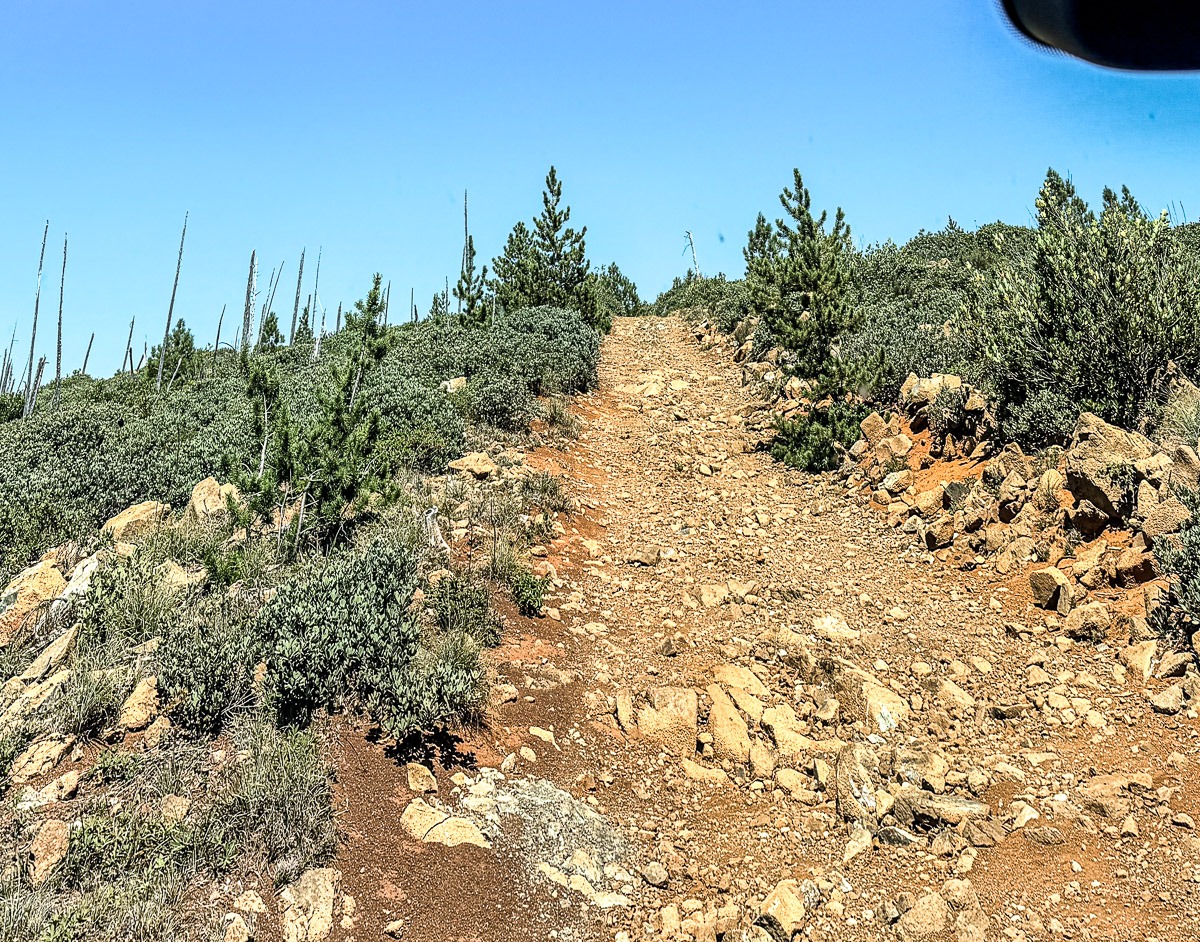
However, the "lookout" site is brutally stony. Instead, I moved to a clean level wide spot in the unpaved road a few hundred yards south. It's much easier to walk around without breaking a leg, and much easier to be rescued should anything happen. Although this is the main road into the Six Rivers wilderness area, it felt secluded as there was so little traffic.
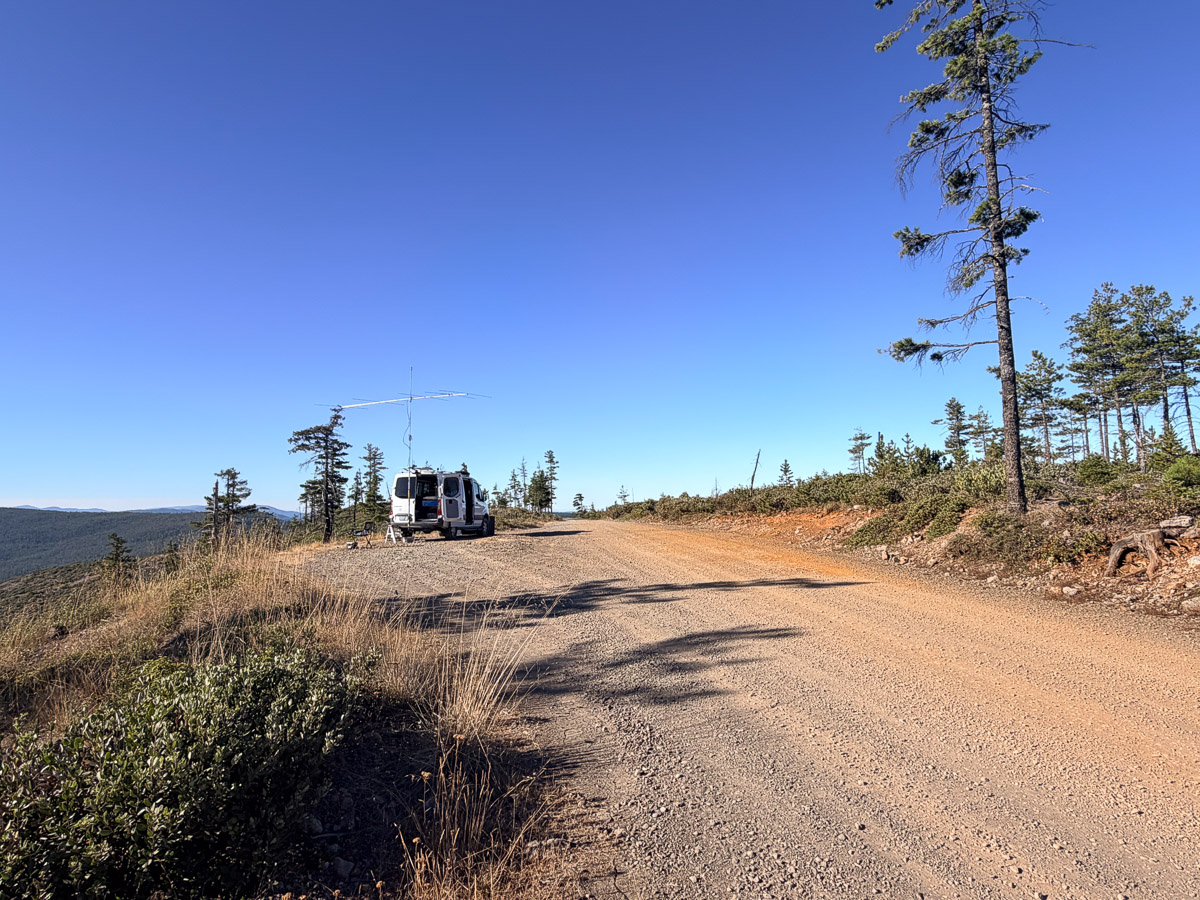
The nice part about roving hilltops is that, even if propagation is bad, there is always an incredible view.
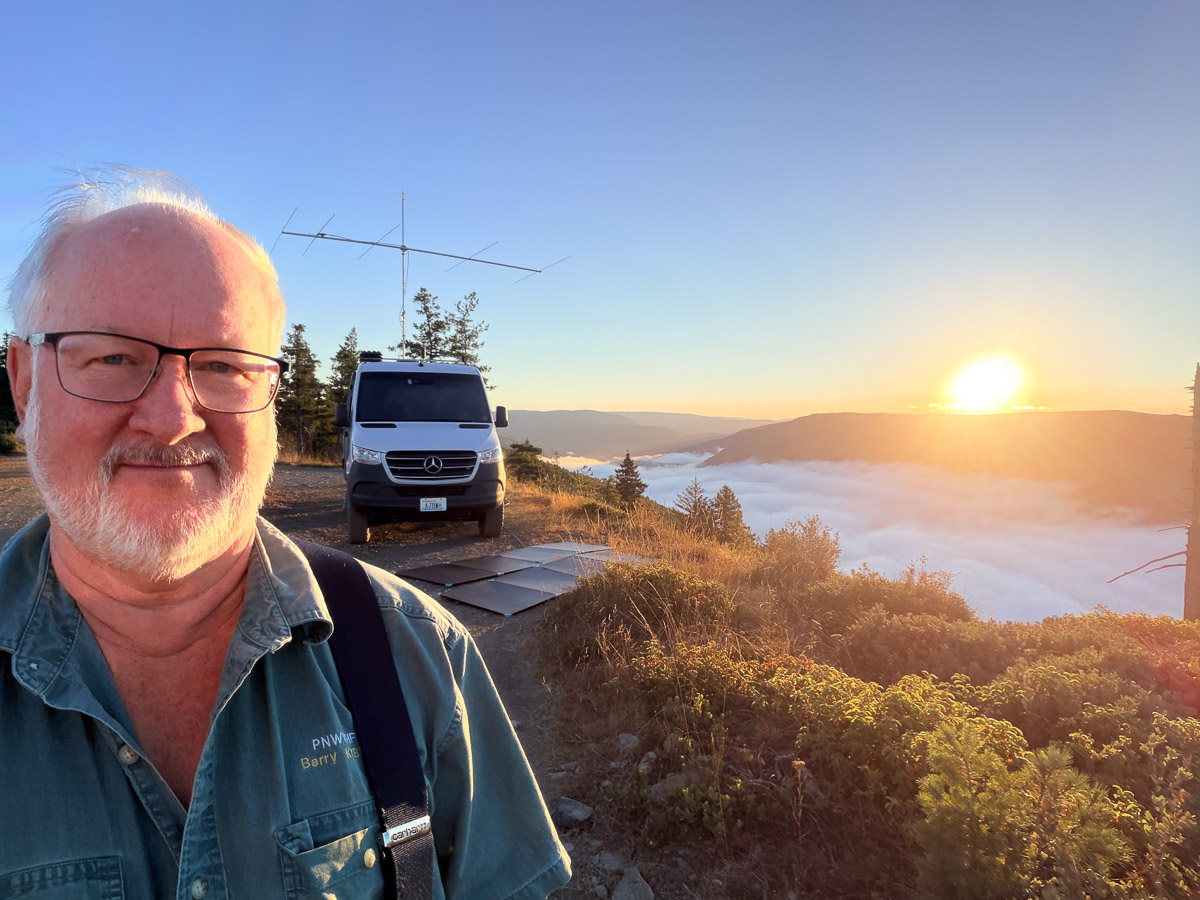
On The Air
On the air, contacts were slow. In four days, I made 170 contacts. The BIC (butt in chair) factor is as important to rovers as it is to hams at home in order to catch short openings. E- skip shifts around and opens/closes all day long on 6 meters. I had BIC for sixteen hours a day.
The highlight was working two of the three people who needed CN71 as their last grid for the FFMA award. Congratulations to Jim K5ND and Jeff N5TJ on their accomplishments. I send big thanks to Dan NP4EI for suggesting Q65 mode.
Wes WA5TKU and Paul K5RT and others had an hourly schedule and we kept trying and trying for four days but to no avail.
I worked only one person on the east coast, Paul K1TOL, and he has an exceptional 6m antenna system: 4-by-9-element array. Over these four days each contact took careful work and coordination. The E-skip season was pretty much all over for us this week. Fortunately, Vance WH2T activated CN71 again a few short days after I left.
In regard to more local PNW contacts, I found it was extremely difficult to work anyone in Seattle from CN71. I did manage to contact my friend Sid AB9BH in Shoreline, and Bob K7TM in Idaho found me from many places along my 10-day boondoggle.
As for the rest of my scouting this trip, I briefly activated CN88, CN97, CN85, CN70, CN81, CN91, CN70, CN80 and CN90 for an hour each. (A "grid square" is 69 miles N-S and 100 miles E-W.) In total, I added 10 grids to my VUCC/r list – I'm still #2 but now have 58 grids activated.
All told, I drove 1,600 miles this trip. I've added lots of material to my online rover location database here at coilgun.info.
Things I Learned
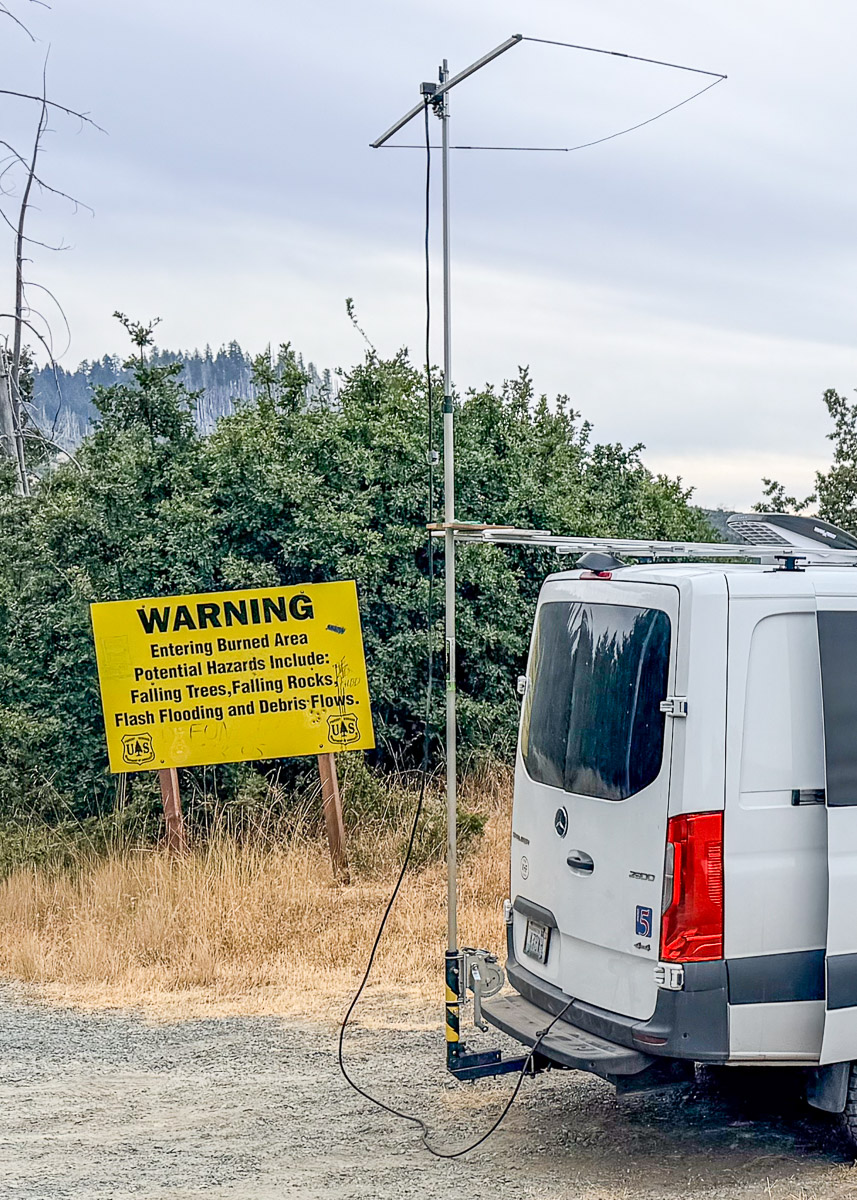
Always bring spare coax (connectors fail). The way my station is wired and arranged, I often close the van's back door on the coax. When I did this fifteen years ago in my Toyota 4Runner, the coax went bad. Since then, I carry spare coax. Maybe on the next trip I'll learn how to not close the door on my cables. Here's a photo from the top of Horse Ridge at CN80gj on my way home.
Always bring PowerPole tools (these connectors fail, too). My station has PowerPole connectors in extensive 12v and 48v DC distribution systems. They've been so reliable I finally stopped carrying the tools. Last year, I drove to Texas. My little fridge has an ugly push-in cigarette-lighter barrel connector and it kept falling out. Of all the things you need to survive in the Chihuahua desert, a fridge is near the top of the list. In Midland TX, a local ham loaned me his toolkit and I replaced the barrel with PowerPole connectors before entering the desert. Since then, I always carry my wiring tools. On this trip, a thin wire pulled out of its connector shell and I was able to repair it. Yay.
Always bring two backups of your detailed itinerary (thumb drives fail). For this trip, I backed up all my trip plans on a trusted thumb drive. It's always been so reliable that it was my only copy. For the first time in decades, my thumb drive was corrupted. I had to reconstruct all my stops from paper notes and memory. Good thing I had printed some things in advance.
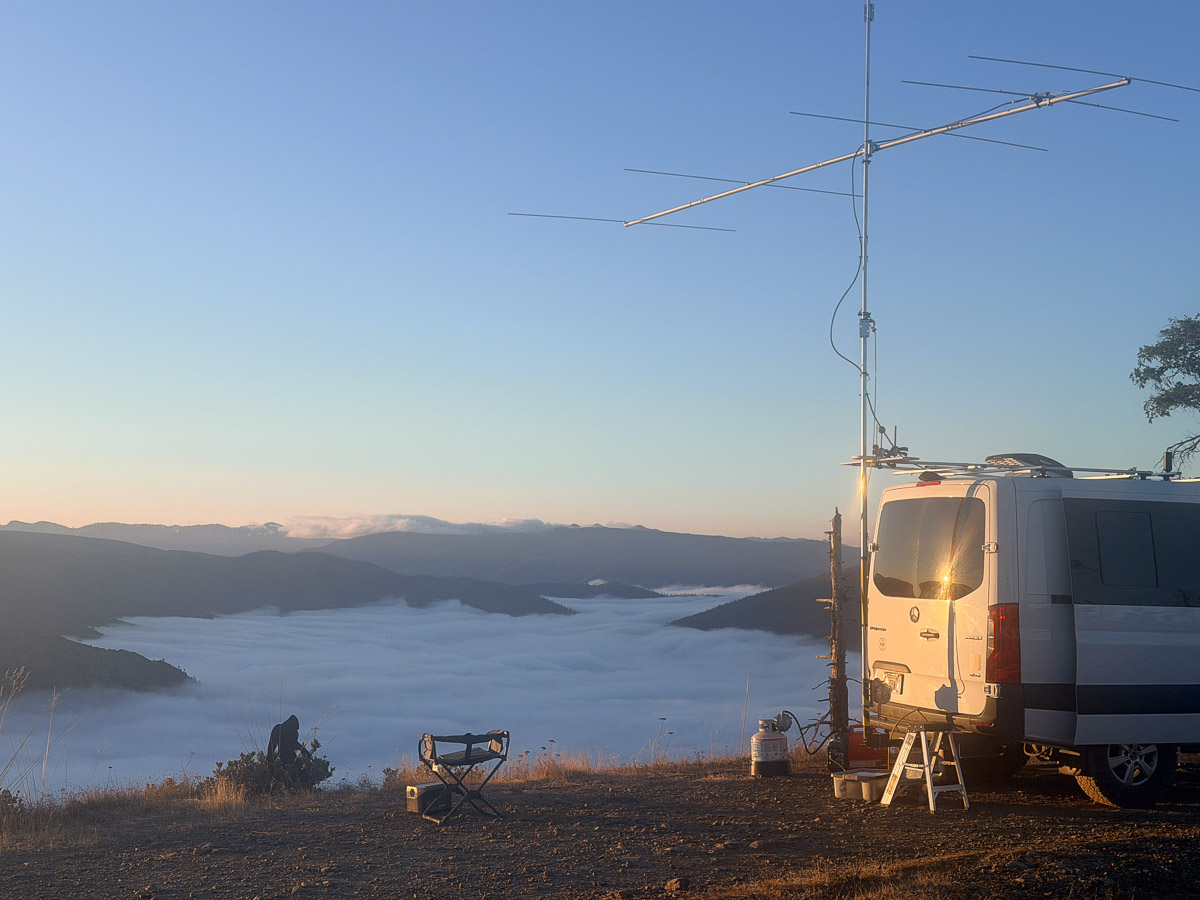
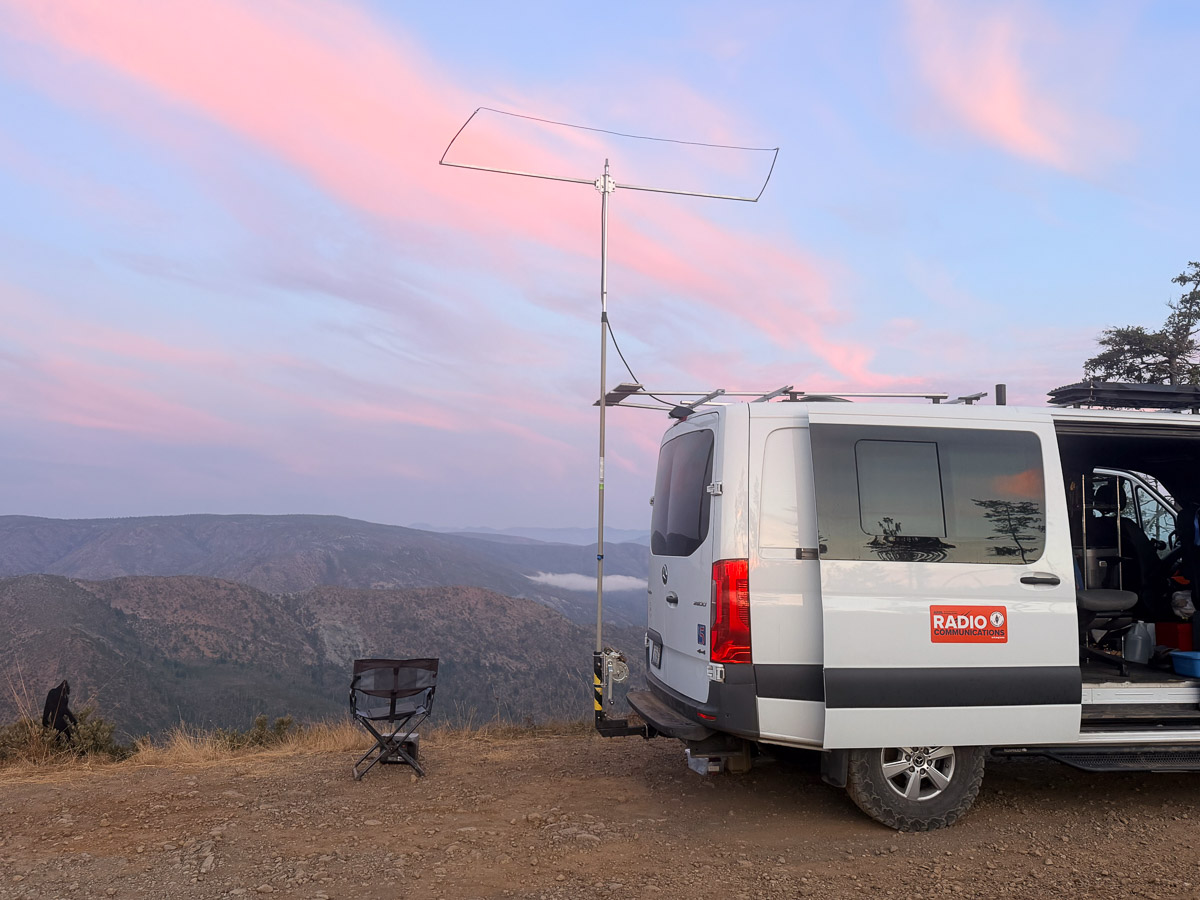
Always bring a backup antenna (antennas fail). A painter's pole and 6m moxon antenna are easy to carry and fantastic for quick and easy roadside activation. I stopped in rest areas along the way and was on the air in a minute. The 6m moxon is innocuous and non-threatening in a busy parking lot. It's also good for staying on the air longer after packing up the big antenna. In this picture, the van was packed and loaded early on my last morning, and I worked a few more hams just before leaving the ridge - gosh, were they ever grateful.
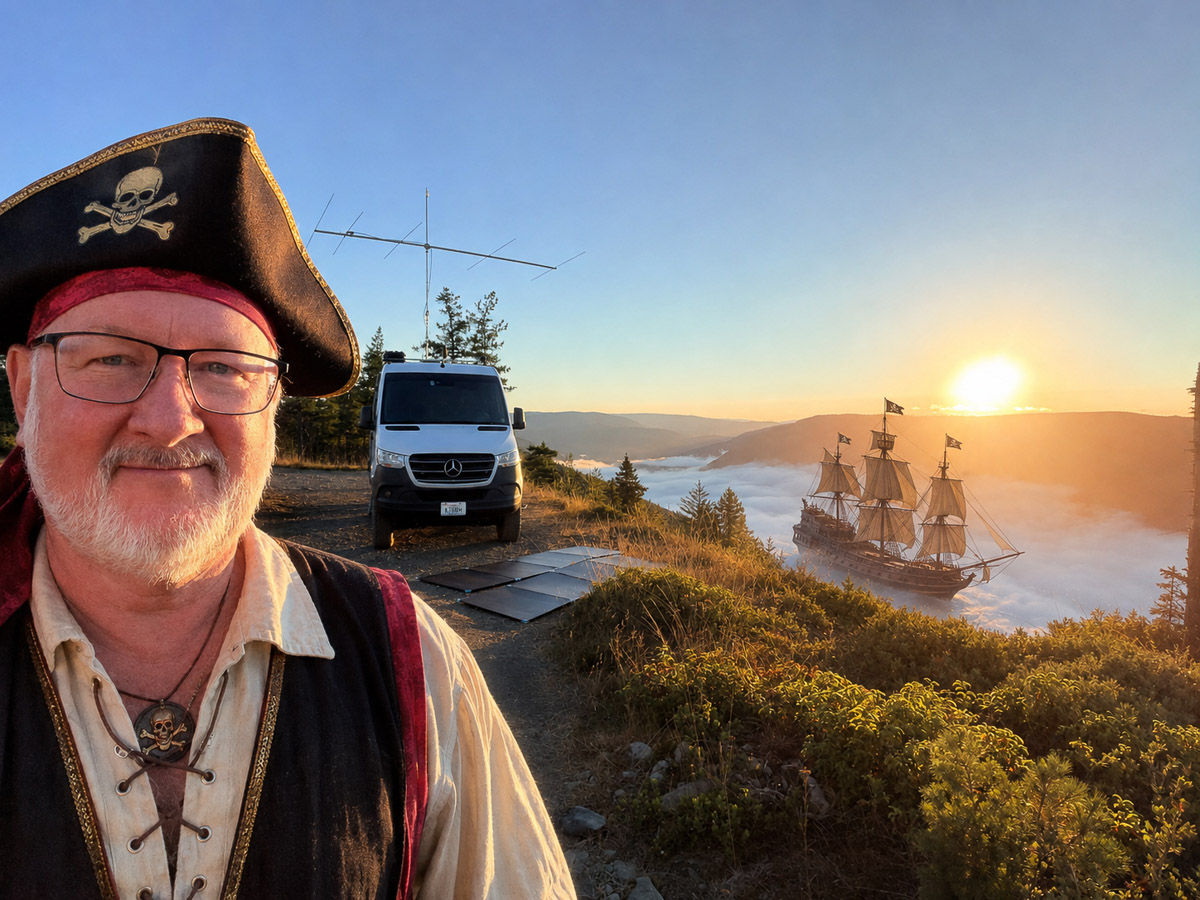
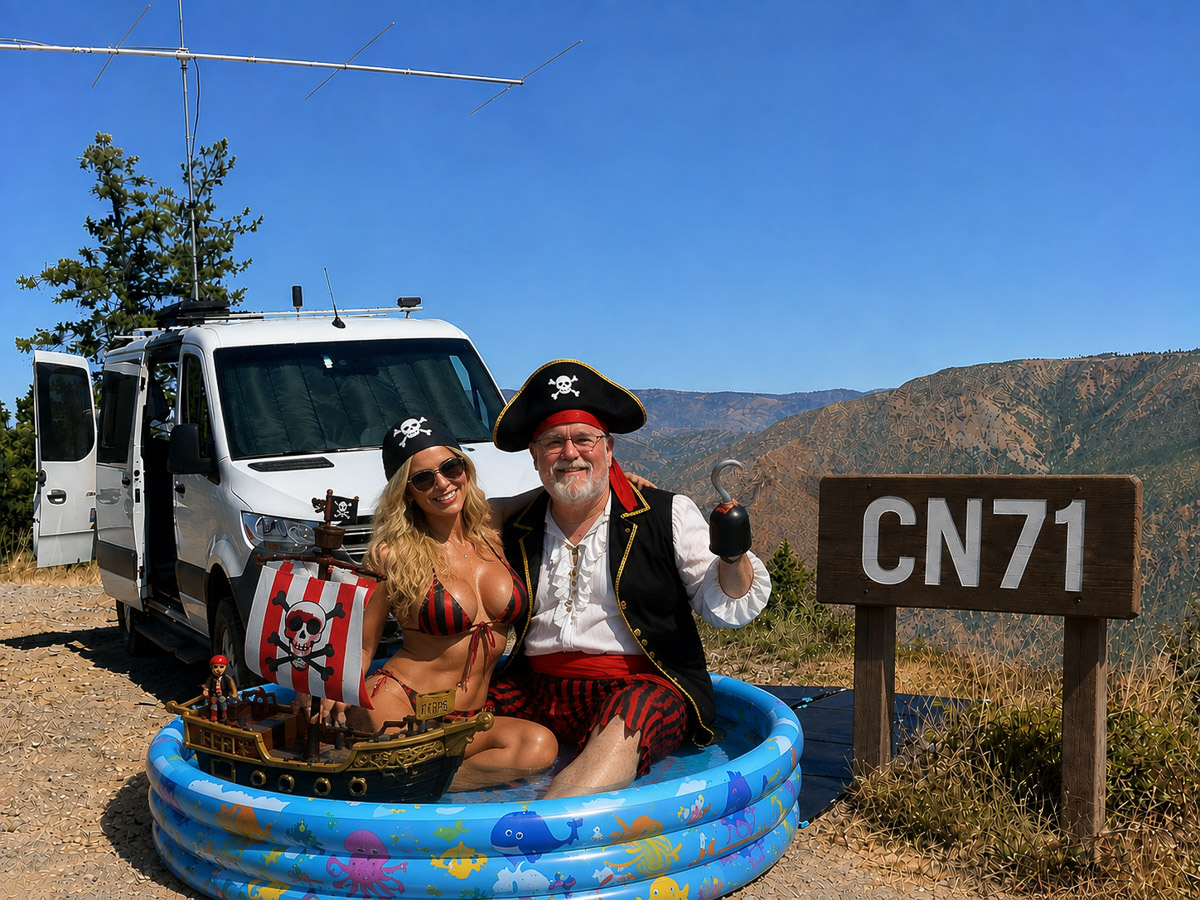
High-speed Internet access is essential. I feel guilty for saying this, for we are ham radio operators. Having internet access on expeditions helps us arrange contacts using Slack in real time: frequency, antenna direction, mode, audio tone settings, band conditions, space weather, and much more. Plus, I like to share photos so homebodies can see what it's like on my hilltop. This year some guys enhanced my pictures - the one shown below is AI (as far as you know).
I brought backups for many other things not mentioned here. But I didn't need them: a backup radio, backup laptop, backup antenna, backup power, extra food and clothing, and 14 gallons of fresh water. No, wait, I actually did use the propane-fueled backup power generator - the California solar power "failed" when the marine air layer brought in heavy coastal fog for two days.
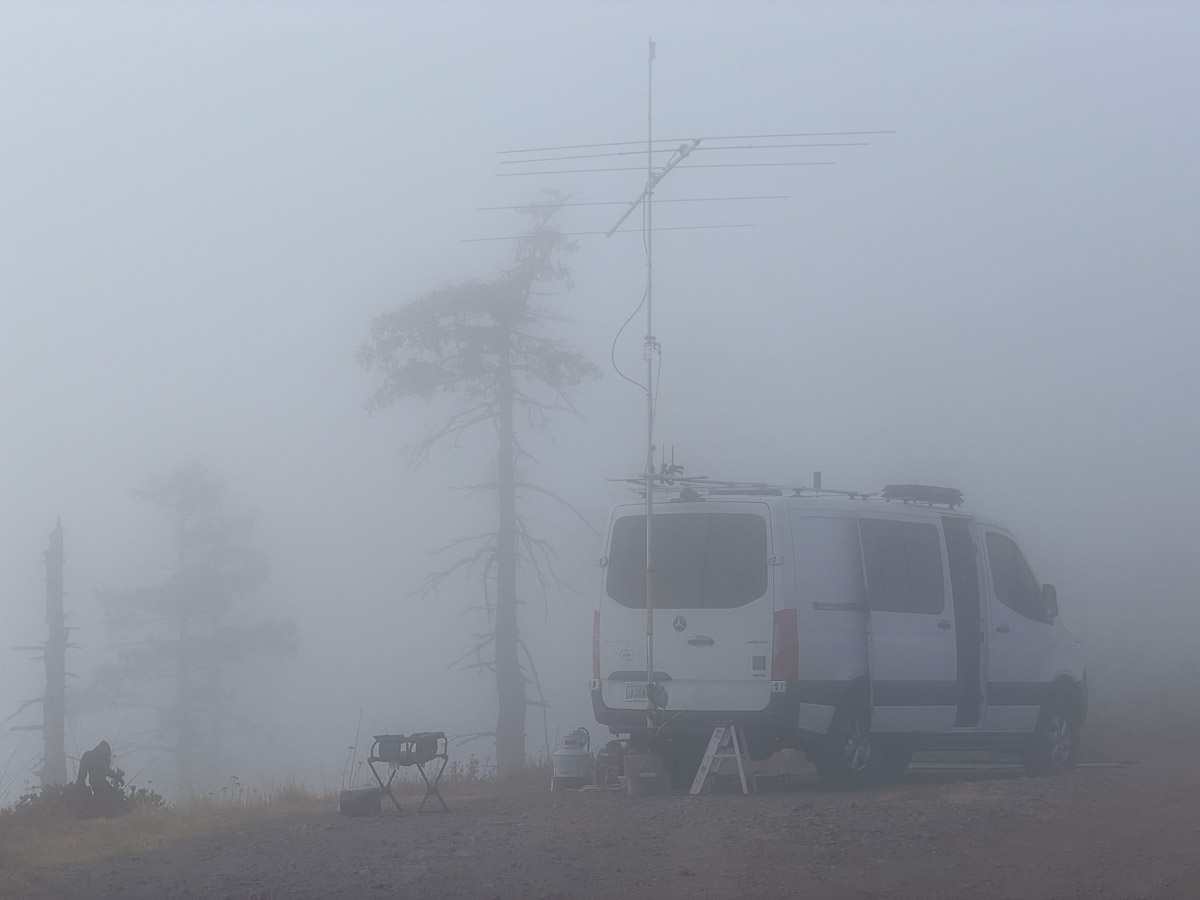
Hey, the success of these trips is all in the preparation. I pack and load from a checklist which has been continuously refined since around 2008. I like to say, "I have two of everything except for me and the van (and the porta potty)."
I hope to see you in the next grid, wherever it is!
Barry K7BWH, barry@k7bwh.com
| < Previous | Page 2 of 39 | Next > |
©1998-2026 Barry Hansen